
- hindcarehospital
- 0 Comments
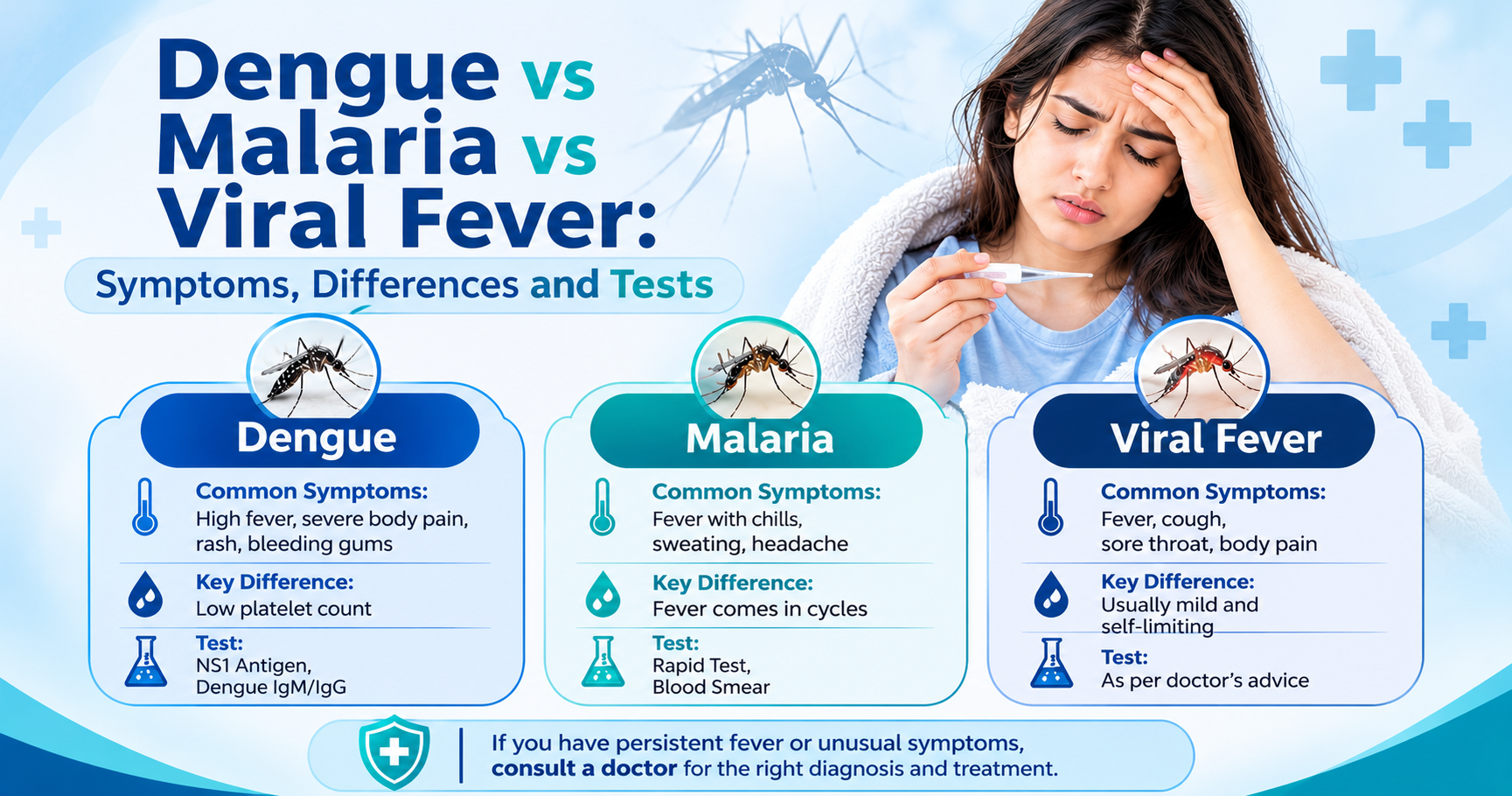
Dengue vs Malaria vs Viral Fever: Symptoms, Differences and Tests
Fever is one of the most common health complaints, especially during the monsoon and changing seasons in India. However, not every fever has the same cause. Dengue, malaria and other viral infections can cause similar symptoms, making it difficult to identify the actual illness without proper medical evaluation.
Understanding the difference between dengue vs malaria vs viral fever can help you recognise warning signs, seek timely medical attention and understand which diagnostic tests your doctor may recommend.
If you or a family member has a persistent fever, headache, body pain, chills or weakness, do not ignore the symptoms. Early medical consultation and appropriate testing can help identify the cause and guide treatment.
What Is the Difference Between Dengue, Malaria and Viral Fever?
Dengue, malaria and other viral fevers are different illnesses, although their symptoms may overlap.
- Dengue: A viral infection transmitted through the bite of an infected Aedes mosquito.
- Malaria: A parasitic infection transmitted through the bite of an infected female Anopheles mosquito.
- Viral fever: A commonly used term for fever caused by different viral infections, such as influenza and other viral illnesses.
Dengue is itself a viral infection. However, people commonly use the term viral fever to describe other viral infections that are not dengue.
The important difference is their cause, transmission, possible complications and diagnostic approach.
- Dengue Fever: Symptoms, Causes and Diagnosis
Dengue is a mosquito-borne viral infection caused by the dengue virus. It spreads through the bite of an infected Aedes mosquito, which is generally active during the daytime.
Dengue cases are a concern in tropical and subtropical regions, including India.
Common Symptoms of Dengue
Some common dengue symptoms include:
- Sudden high fever
- Severe headache
- Pain behind the eyes
- Muscle and joint pain
- Nausea and vomiting
- Skin rash
- Loss of appetite
- Weakness and fatigue
Symptoms generally begin 4–10 days after infection and may last around 2–7 days.
Warning Signs of Severe Dengue
Dengue can sometimes become severe, particularly around the time the fever starts subsiding. A reduction in fever does not always mean that the patient is recovering.
Watch for these warning signs:
- Severe abdominal pain
- Persistent vomiting
- Bleeding from the nose or gums
- Blood in vomit or stool
- Rapid breathing
- Extreme tiredness or restlessness
- Pale, cold skin
- Excessive thirst or weakness
Important: Seek immediate medical attention if any of these warning signs appear. Severe dengue can be a medical emergency.
Which Tests Are Used to Diagnose Dengue?
A doctor may recommend the following tests depending on the duration of fever and clinical condition:
- Dengue NS1 Antigen Test: Commonly used during the early phase of illness.
- Dengue IgM Antibody Test: Helps identify a recent dengue infection, particularly as the illness progresses.
- Dengue RT-PCR: Detects dengue viral genetic material when clinically appropriate.
- Complete Blood Count (CBC): Helps monitor platelet count, white blood cells and haematocrit.
The choice and timing of the test matter. A CBC alone cannot confirm dengue, and platelet counts must be interpreted alongside the patient’s overall condition.
- Malaria: Symptoms, Causes and Diagnosis
Malaria is an infectious disease caused by Plasmodium parasites. It spreads through the bite of an infected female Anopheles mosquito.
Unlike dengue, malaria is caused by a parasite rather than a virus. It requires specific medical treatment.
Common Symptoms of Malaria
Symptoms may vary depending on the type of malaria parasite and the patient’s health.
Common symptoms include:
- Fever with chills
- Shivering
- Sweating
- Headache
- Muscle pain
- Nausea and vomiting
- Weakness and fatigue
- Sometimes recurring episodes of fever
Not every patient experiences the same fever pattern. Therefore, symptoms alone cannot confirm malaria.
When Can Malaria Become Serious?
If malaria is not diagnosed and treated promptly, it can lead to serious complications.
Seek urgent medical attention if you experience:
- Confusion or altered consciousness
- Seizures
- Difficulty breathing
- Severe weakness
- Yellowing of the eyes or skin
- Dark or bloody urine
- Abnormal bleeding
Early diagnosis and appropriate treatment are important to prevent complications.
Which Tests Are Used to Diagnose Malaria?
A doctor may recommend:
- Malaria Peripheral Blood Smear: Examines a blood sample under a microscope to detect malaria parasites.
- Malaria Rapid Diagnostic Test (RDT): Detects specific malaria parasite antigens.
- Complete Blood Count (CBC): May help assess associated changes such as anaemia or low platelet count.
Malaria should be confirmed through parasite-based testing, such as microscopy or an appropriate rapid diagnostic test.
- Viral Fever: Symptoms, Causes and Diagnosis
Viral fever is a commonly used term for fever caused by different viral infections. It is not one specific disease.
Common viral infections that may cause fever include influenza and other respiratory viruses.
Common Symptoms of Viral Fever
Symptoms may include:
- Mild to high fever
- Headache
- Body aches
- Sore throat
- Runny or blocked nose
- Cough
- Fatigue
- Chills
- Loss of appetite
The duration and severity of symptoms depend on the virus responsible and the patient’s overall health.
How Is Viral Fever Diagnosed?
There is no single test that confirms every type of viral fever.
A doctor may recommend investigations based on symptoms and medical history, such as:
- Complete Blood Count (CBC)
- Influenza testing, when indicated
- Other infection-specific tests, if clinically required
In some cases, a doctor may diagnose a likely viral illness through a clinical examination. If symptoms persist or worsen, further investigations may be necessary to rule out other infections.
Dengue vs Malaria vs Viral Fever: Key Differences
Understanding the differences between these illnesses can help you know what to discuss with your doctor.
Comparison | Dengue | Malaria | Viral Fever |
Main cause | Dengue virus | Plasmodium parasite | Different viruses |
Transmission | Infected Aedes mosquito | Infected Anopheles mosquito | Depends on the virus; many spread through respiratory droplets or contact |
Common fever pattern | Often sudden high fever | Fever may occur with chills and sweating | Varies depending on the virus |
Headache | Common, sometimes severe | Common | Common |
Body pain | Often prominent | Common | Common |
Pain behind eyes | Can occur | Not a typical distinguishing feature | Not a typical distinguishing feature |
Skin rash | Can occur | Not a typical feature | Possible with some viral infections |
Chills and shivering | May occur | Common | May occur |
Main diagnostic tests | NS1, IgM, RT-PCR as indicated | Blood smear or malaria RDT | Tests based on suspected virus |
Remember: These symptoms are general patterns, not a diagnostic checklist. There is significant overlap between illnesses, and only an appropriate medical evaluation and diagnostic testing can help establish the cause.
Which Blood Tests Should You Get for Fever?
If you have a fever that is persistent, worsening or associated with other concerning symptoms, your doctor may recommend blood investigations.
Here are some commonly used tests:
- Complete Blood Count (CBC)
A CBC measures different components of blood, including:
- Red blood cells
- White blood cells
- Haemoglobin
- Platelets
- Haematocrit
It helps doctors assess certain changes associated with infections and monitor the patient’s condition.
- Dengue NS1 Antigen Test
This test helps detect dengue infection during the early phase of illness. It is generally useful within the first seven days, depending on the timing of the sample and clinical context.
- Dengue IgM Test
This test detects antibodies produced in response to dengue infection. It becomes more useful as the illness progresses, particularly after the first week.
- Malaria Test
Malaria testing may include a
What Is BMI?
BMI stands for Body Mass Index. It is a commonly used screening measurement that considers a person’s height and weight to provide an indication of their weight category.
BMI can be useful as a starting point for understanding your weight and maintaining awareness of your overall health.
However, BMI is only one health indicator and should not be considered a complete assessment of your health.
Why Is BMI Important?
Understanding your BMI can help you become more aware of your weight and encourage healthier lifestyle choices.
A BMI assessment may help you:
- Understand your general weight category
- Monitor changes in your weight
- Become more aware of your health
- Support healthy lifestyle goals
- Discuss weight-related concerns with a healthcare professional