
- hindcarehospital
- 0 Comments
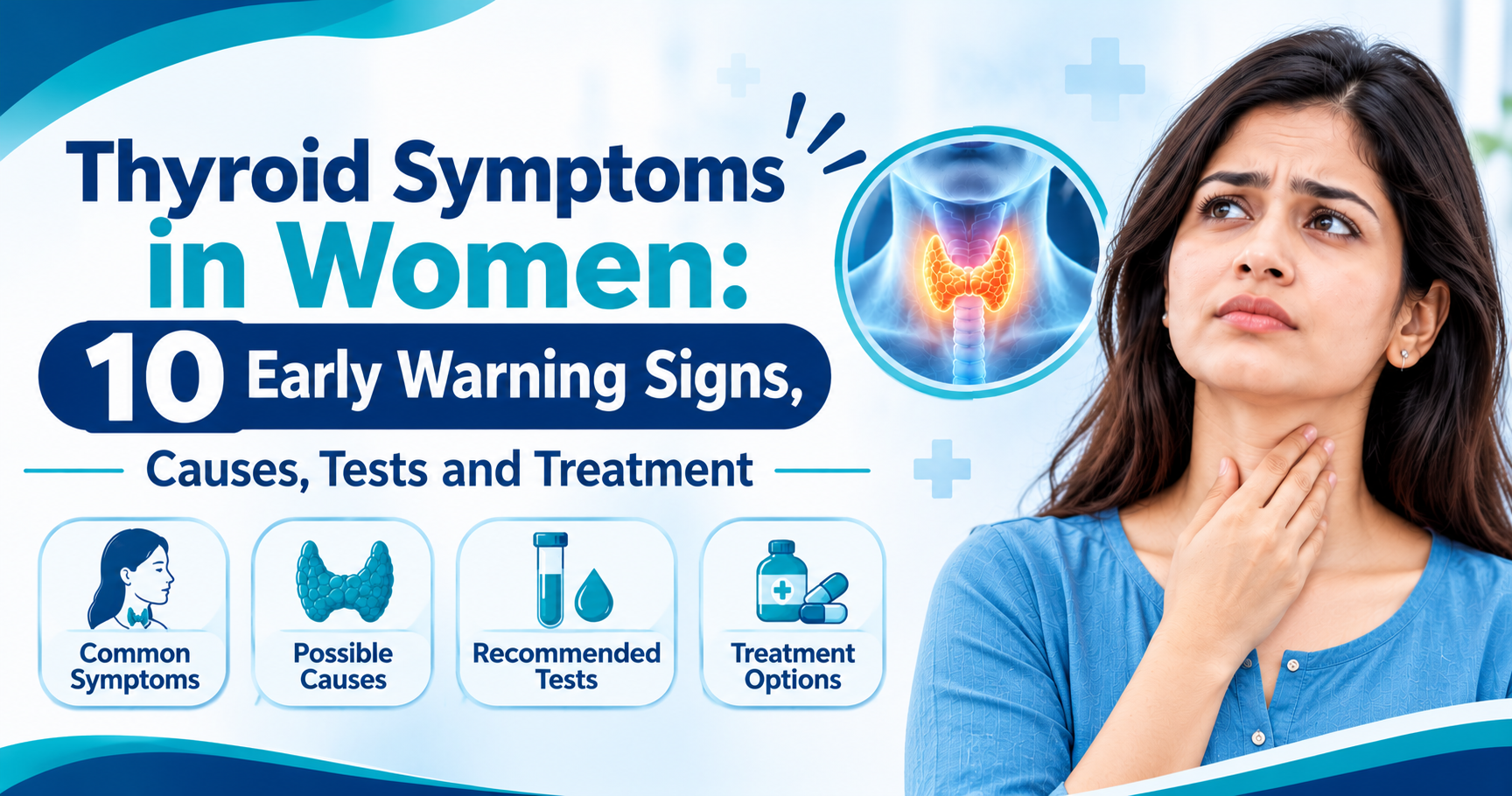
Thyroid Symptoms in Women: 10 Early Warning Signs, Causes, Tests and Treatment
What Is the Thyroid Gland and Why Is It Important?
The thyroid is a small, butterfly-shaped gland located at the front of the neck, just below the voice box. It produces hormones that help regulate metabolism, body temperature, heart rate and energy levels.
The two main thyroid hormones are:
T3 (Triiodothyronine): Helps regulate metabolism, energy use and several body functions.
T4 (Thyroxine): Supports metabolism, growth and normal functioning of different organs.
When the thyroid gland does not produce enough hormones, the condition is called hypothyroidism. When it produces excessive hormones, it is called hyperthyroidism.
Both conditions can affect women’s physical and reproductive health.
10 Common Thyroid Symptoms in Women
Thyroid symptoms can develop gradually and may differ depending on the type of thyroid disorder. Some women experience several symptoms, while others notice only a few changes.
1. Unexplained Weight Gain or Weight Loss
Unexpected weight changes can sometimes indicate a thyroid hormone imbalance.
Women with hypothyroidism may experience weight gain because the body’s metabolism slows down. In contrast, hyperthyroidism can increase metabolic activity, potentially causing unexplained weight loss even when appetite increases.
However, weight changes alone cannot confirm a thyroid disorder.
2. Excessive Hair Fall and Hair Thinning
Hair fall is another possible sign of thyroid problems in women.
Thyroid hormone imbalance can affect the normal hair growth cycle, resulting in:
Excessive hair shedding
Thinning scalp hair
Dry and brittle hair
Changes in hair texture
Loss of eyebrow hair in some cases
Nutritional deficiencies, stress and hormonal changes can also cause hair loss, so proper evaluation is important.
3. Constant Tiredness and Fatigue
Feeling exhausted even after getting sufficient sleep may be associated with an underactive thyroid.
Common symptoms include low energy, muscle weakness, increased sleepiness and difficulty concentrating.
Persistent fatigue should not automatically be attributed to thyroid problems, as anaemia, sleep disorders and other medical conditions can cause similar symptoms.
4. Irregular or Heavy Menstrual Periods
Thyroid hormones play an important role in menstrual cycle regulation.
Women with thyroid disorders may experience:
Heavy menstrual bleeding
Irregular periods
Lighter periods
Missed periods
Changes in menstrual cycle duration
If these changes continue, consult a healthcare professional for appropriate evaluation.
5. Dry Skin and Brittle Nails
An underactive thyroid can affect skin and hair health.
Possible signs include dry or rough skin, brittle nails, slow nail growth and puffiness around the face.
These symptoms can also occur due to nutritional deficiencies and other skin conditions.
6. Mood Swings, Anxiety and Depression
Thyroid hormone imbalance can influence mental well-being.
Hypothyroidism may be associated with low mood, depression and difficulty concentrating. Hyperthyroidism may cause anxiety, nervousness, irritability and restlessness.
If emotional changes occur alongside physical symptoms, discussing them with a doctor may help identify the underlying cause.
7. Sensitivity to Cold or Heat
Changes in thyroid hormone levels can affect how the body regulates temperature.
Women with hypothyroidism may feel unusually cold, even in comfortable surroundings.
Women with hyperthyroidism may experience excessive sweating, heat intolerance and warm or moist skin.
8. Constipation or Frequent Bowel Movements
Thyroid hormones influence digestive activity.
An underactive thyroid may slow digestion, leading to constipation. An overactive thyroid can increase bowel activity and cause frequent bowel movements or diarrhoea.
Persistent digestive changes should be medically evaluated.
9. Swelling in the Neck
An enlarged thyroid gland is called a goitre.
It may appear as swelling at the front of the neck and sometimes cause difficulty swallowing, throat discomfort or voice changes.
A neck swelling should be examined by a healthcare professional. Depending on the findings, a thyroid ultrasound or other investigation may be recommended.
10. Difficulty Getting Pregnant
Thyroid hormone imbalance can affect ovulation and menstrual health.
Some women with untreated thyroid disorders may experience fertility difficulties or irregular menstrual cycles.
Thyroid health is also important during pregnancy because untreated thyroid disorders can affect both maternal and foetal health.
Women planning pregnancy should discuss thyroid testing with their healthcare provider when appropriate.
What Causes Thyroid Problems in Women?
Several factors can contribute to thyroid disorders.
Common causes include:
Autoimmune conditions: Hashimoto’s disease can cause hypothyroidism, while Graves’ disease can cause hyperthyroidism.
Family history: Having close relatives with thyroid disorders may increase the risk.
Pregnancy and postpartum changes: Hormonal and immune system changes around pregnancy can affect thyroid function.
Iodine imbalance: Both insufficient and excessive iodine intake can affect thyroid hormone production.
Certain medications: Some medicines can interfere with normal thyroid function.
Previous thyroid treatment: Thyroid surgery or radioactive iodine treatment can affect hormone production.
Identifying the underlying cause helps doctors recommend appropriate treatment.
What Are the Types of Thyroid Disorders?
1. Hypothyroidism (Underactive Thyroid)
Hypothyroidism occurs when the thyroid gland does not produce enough thyroid hormones.
Common symptoms include:
Weight gain
Hair fall
Constant fatigue
Dry skin
Constipation
Feeling cold
Heavy or irregular periods
Muscle weakness
Hashimoto’s disease, an autoimmune condition, is a common cause of hypothyroidism.
2. Hyperthyroidism (Overactive Thyroid)
Hyperthyroidism occurs when the thyroid gland produces excessive thyroid hormones.
Common symptoms include:
Unexplained weight loss
Rapid heartbeat
Excessive sweating
Anxiety and irritability
Trembling hands
Difficulty sleeping
Increased appetite
Frequent bowel movements
Menstrual changes
Graves’ disease is a common cause of hyperthyroidism.
Which Thyroid Tests Are Recommended for Women?
A thyroid function test is used to evaluate how well the thyroid gland is working. Doctors usually begin with a TSH blood test and may recommend additional investigations depending on the results.
| Thyroid test | Purpose |
|---|---|
| TSH Test | Evaluates thyroid-stimulating hormone levels |
| Free T4 Test | Measures available thyroxine hormone |
| T3 Test | Measures triiodothyronine hormone |
| Anti-TPO Test | Helps identify autoimmune thyroid conditions |
| Thyroid Ultrasound | Examines thyroid size, nodules and structural changes |
What Is the TSH Test?
The TSH test is commonly used as the initial investigation for suspected thyroid dysfunction.
A higher-than-normal TSH level often indicates hypothyroidism, while a lower-than-normal TSH level may indicate hyperthyroidism.
However, TSH results must be interpreted alongside other test results, symptoms and medical history.
Not every woman needs all thyroid tests. Your doctor will recommend suitable investigations based on your individual condition.
How Are Thyroid Problems Treated?
Treatment depends on the type of thyroid disorder and its underlying cause.
Hypothyroidism: It is commonly treated with levothyroxine, a medicine that replaces the thyroid hormone the body cannot produce sufficiently. Regular blood testing helps doctors monitor treatment.
Hyperthyroidism: Treatment options may include antithyroid medicines, medicines to control symptoms, radioactive iodine treatment or surgery in selected cases.
Women who are pregnant, planning pregnancy or already taking thyroid medication may require closer monitoring and medical guidance.
Never start, stop or change thyroid medication without consulting your doctor.
When Should Women Get a Thyroid Test?
Consider consulting a doctor if you experience persistent or unexplained symptoms such as:
Excessive hair fall
Unexplained weight changes
Constant fatigue
Irregular menstrual periods
Unusual sensitivity to cold or heat
Persistent constipation
Rapid or irregular heartbeat
Swelling around the neck
Women with a family history of thyroid disorders, autoimmune conditions or pregnancy-related thyroid concerns should also discuss appropriate testing with their healthcare provider.
If you are looking for a thyroid test in Mira Road, Mumbai, consult a healthcare professional about suitable diagnostic investigations.